
INCAR² Joins International CrispResist Consortium to Advance Genetic Solutions Against Sea Lice
The INCAR² Center for Applied Research has joined the international CrispResist consortium, expanding a collaboration between researchers in Chile, Norway, the United Kingdom and Canada to uncover the genetic mechanisms behind salmon resistance to sea lice.
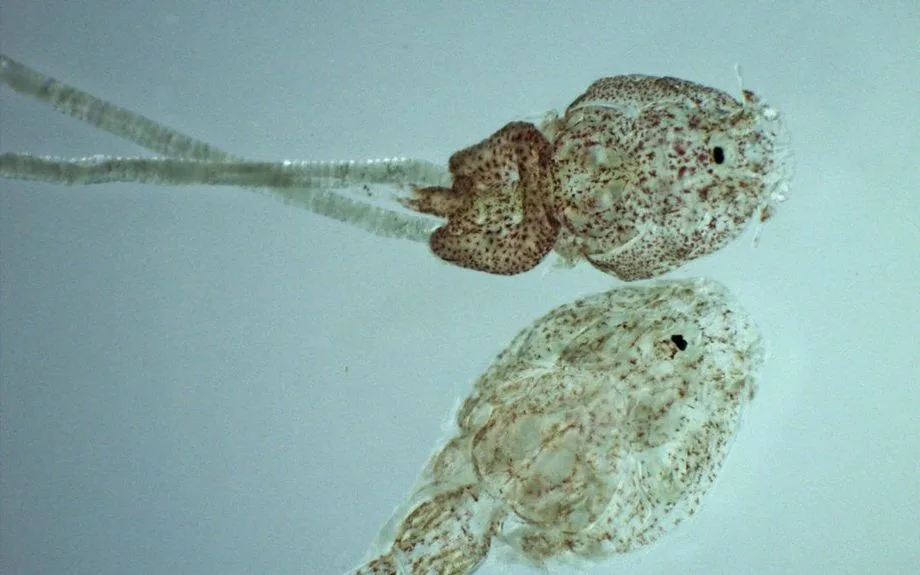
The partnership connects research on two major parasites affecting global salmon farming: Lepeophtheirus salmonis in the Northern Hemisphere and Caligus rogercresseyi in Chile.
Funded by the Norwegian Seafood Research Fund (FHF) and coordinated by Nofima, CrispResist brings together researchers from the Norwegian Institute of Marine Research, the Roslin Institute at the University of Edinburgh, the University of Bergen and Fast Fish Inc./University of Prince Edward Island, along with INCAR².
From Comparative Genomics to CRISPR
CrispResist investigates why some salmonid species, including coho and pink salmon, show greater resistance to sea lice than Atlantic salmon. Researchers have identified differences in gene and protein expression between resistant and susceptible salmonids, as well as parasite proteins involved in suppressing host immune responses.
A key component of the project is the use of CRISPR-based gene editing as a functional genomics tool. Rather than simply identifying genes associated with resistance, scientists aim to experimentally test whether candidate genes directly influence a salmon’s ability to resist sea lice.
The findings could eventually inform multiple control strategies, including selective breeding, vaccines, functional feeds and, subject to regulatory and societal acceptance, gene-edited salmon with increased parasite resistance.
Bringing Chile’s Caligus Model Into the Consortium
INCAR² brings more than a decade of research on C. rogercresseyi, integrating genomics, transcriptomics, epigenomics, epidemiology and host-parasite biology.
As part of CrispResist, the Chilean center will contribute genomic resources from different developmental stages of the parasite, a chromosome-level and haplotype-resolved C. rogercresseyi genome, and genomic data from resistant and susceptible Atlantic salmon families experimentally exposed to the parasite.
INCAR² will also provide expertise in controlled sea lice challenges and experimental vaccine development. Its facilities at the University of Concepción could allow researchers to test candidate resistance mechanisms identified by CrispResist in Atlantic salmon challenged with the Chilean parasite.
This comparative approach could help determine whether biological mechanisms associated with resistance to L. salmonis are conserved across different salmon and sea lice species.
Toward More Sustainable Sea Lice Control
Sea lice remain a major biological and economic challenge for salmon aquaculture. CrispResist aims to provide the biological evidence needed to develop preventive strategies that could reduce reliance on antiparasitic treatments.
For INCAR², joining the consortium also provides an opportunity to move from descriptive genomics toward functional validation, combining comparative genomics, epigenomics, CRISPR and controlled parasite challenges.
The collaboration comes as Chile begins exploring the scientific and regulatory implications of gene editing in aquaculture. While commercial applications would require separate regulatory and societal consideration, CrispResist could generate experimental evidence to inform future discussions about the responsible use of these technologies.
By connecting the Chilean C. rogercresseyi model with international research on L. salmonis, the consortium aims to identify robust biological pathways that could ultimately lead to more sustainable and genetically informed strategies for sea lice control worldwide.
.webp)
.webp)