
Carlos Chávez Appointed Dean of Universidad de Talca’s Faculty of Economics and Business
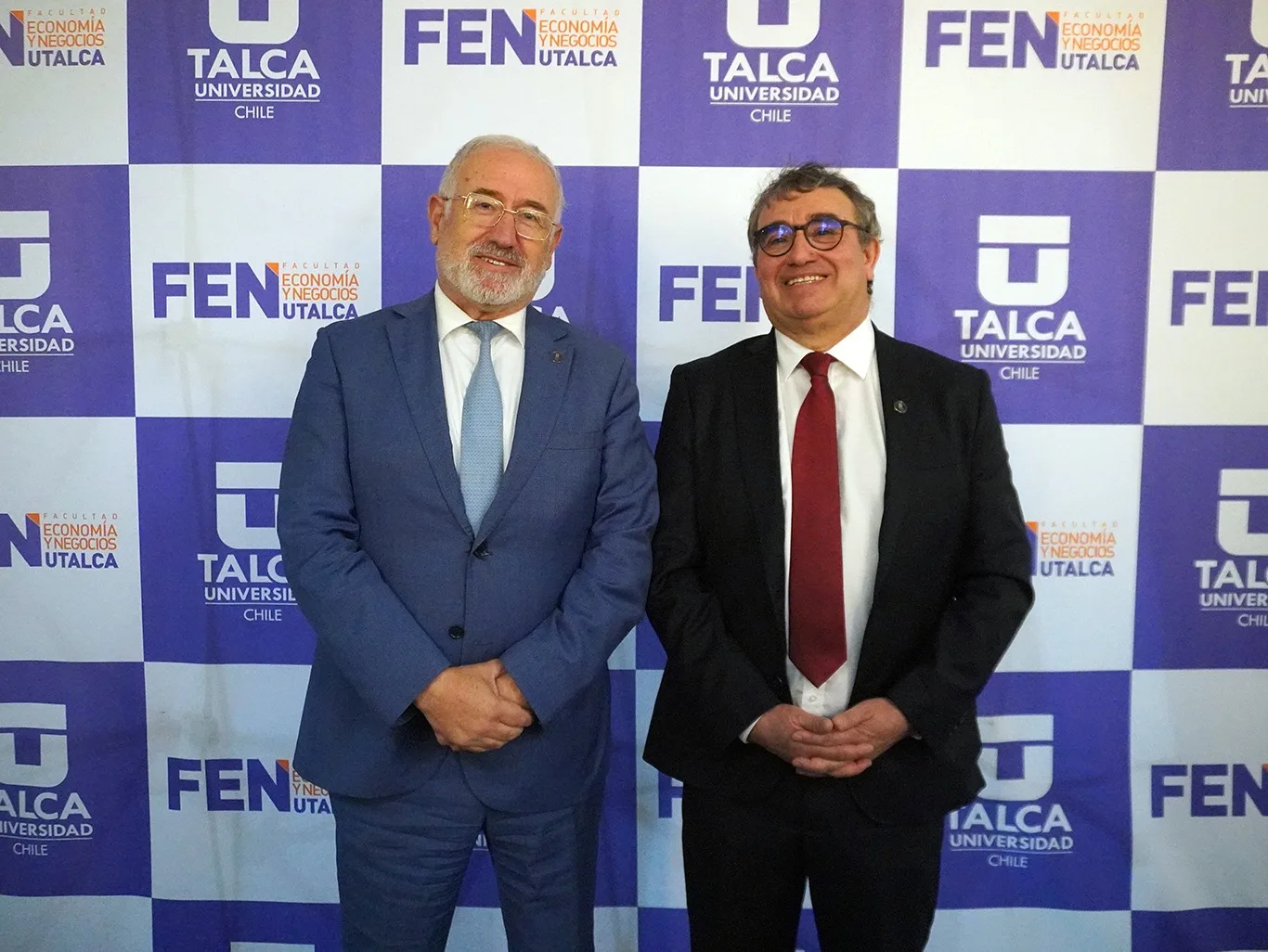
Dr. Carlos Chávez Rebolledo, Principal Researcher at the INCAR² Center for Applied Research, has been appointed Dean of the Faculty of Economics and Business at Universidad de Talca (UTalca) for the 2026–2029 term.
His appointment recognizes a career spanning environmental economics, natural resource management and public policy, with research focused on designing strategies that balance economic development, environmental conservation and social welfare.
Chávez is a Full Professor at Universidad de Talca and Principal Researcher in INCAR²’s Socioeconomic Impacts, Governance and Market Dynamics research line. His work at the center explores the design and evaluation of environmental policies and natural resource management strategies, including issues relevant to aquaculture sustainability and governance.
An economist trained at Universidad de Concepción, Chávez earned a Master’s degree in Economics from Georgetown University and a PhD in Natural Resource Economics from the University of Massachusetts. His research has appeared in leading international journals including Nature Sustainability, Nature Communications, Journal of Environmental Economics and Management, Marine Policy and Reviews in Aquaculture.
His career has also bridged academic research and public policy. Chávez has served as President of Fondecyt’s Higher Council for Science, participated in Chile’s National Lithium Commission, and represented the Council of Rectors of Chilean Universities (CRUCH) on the National Council for Sustainability and Climate Change.
Economics, Sustainability and New Technologies
As Dean, Chávez plans to position the faculty to respond more actively to major economic and technological transformations, including artificial intelligence, digitalization, geopolitical risks and the transition toward more inclusive and environmentally sustainable economic models.
“The economy and business can no longer be understood solely through the frameworks of the past,” Chávez said in his inaugural address, emphasizing that universities should play an active role in leading debate and developing solutions to emerging economic, social and environmental challenges.
His appointment also strengthens the connection between economics, environmental governance and applied research, areas that are becoming increasingly important as industries such as aquaculture seek to reconcile competitiveness with sustainability and responsible resource management.