
INCAR² Scientists Develop Novel Molecular Vaccine Against Sea Lice
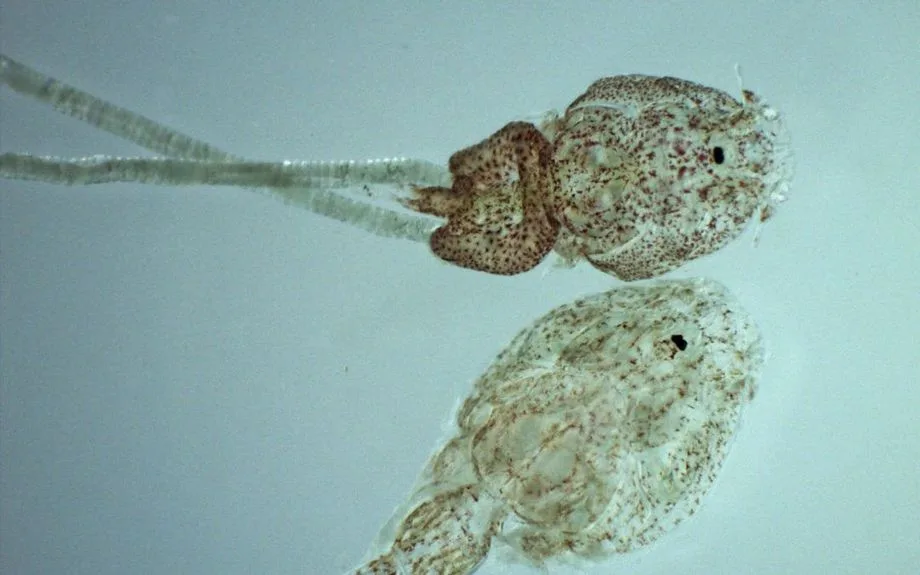
Scientists at the INCAR² Center for Applied Research have developed an experimental recombinant vaccine against the sea louse Caligus rogercresseyi, one of the most significant health challenges facing Atlantic salmon farming in Chile.
The research, led by Antonio Casuso, Adrián Rodríguez-Gabilondo, Yeny Leal, Cristian Gallardo-Escárate and Valentina Valenzuela-Muñoz, explored a new vaccination strategy targeting specific functional domains of vitellogenin proteins involved in the parasite’s reproductive biology.
Sea lice infestations can affect fish welfare and growth while increasing treatment costs. Control has traditionally relied heavily on chemical and antiparasitic treatments, creating growing interest in preventive approaches that could complement existing management strategies.
Targeting Key Parasite Proteins
Instead of using an entire protein as an antigen, the researchers developed subunit vaccines targeting the von Willebrand factor type D (VWF) domain found in two C. rogercresseyi vitellogenins, known as CrVtg-VWF1 and CrVtg-VWF2.
Experimental trials in Atlantic salmon (Salmo salar) produced promising results. Seven days after infestation, vaccinated fish showed an approximately 12% reduction in larval attachment.
The strongest effects were recorded after 21 days, when the parasites had reached adulthood. The CrVtg-VWF1 formulation reduced parasite loads by 40.2%, while CrVtg-VWF2 achieved 53.4% efficacy.
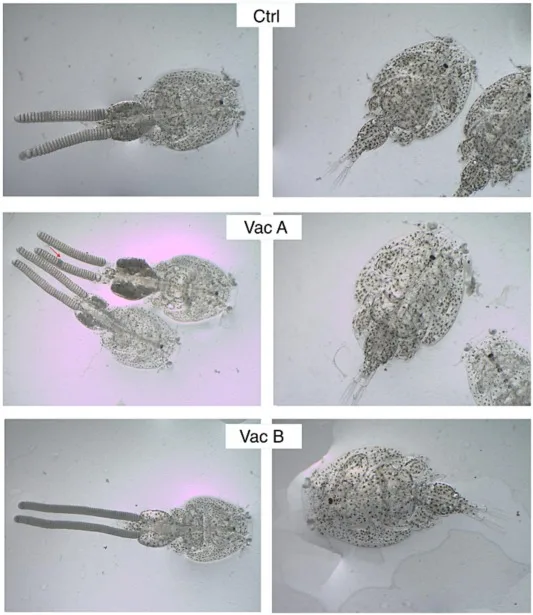
Both formulations reduced male and female lice. Researchers also detected abnormalities in egg sacs and reduced egg viability among some surviving females, suggesting that vaccination could potentially interfere with parasite reproduction. Further studies will be needed to confirm this effect.
Toward More Sustainable Sea Lice Control
Vaccination also triggered changes in the salmon immune response. Vaccinated fish showed increased expression of immune-related genes including MHC II, IgM, IgT and TLR22, while inflammatory markers in the skin decreased alongside the lower parasite burden.
The researchers see the technology not as a stand-alone solution, but as part of an integrated sea lice management strategy. If validated under commercial farming conditions, preventive vaccination could help reduce reliance on pharmacological treatments while improving fish welfare and the sustainability of salmon production.
The findings point to functional domain-based vaccines as a potential new generation of tools for parasite control in aquaculture, although additional research will be required to determine their effectiveness at production scale.
Scientific paper: Protective and immunostimulatory effects of a vitellogenin functional domain-based vaccine in Atlantic salmon against Caligus rogercresseyi
https://doi.org/10.1016/j.vaccine.2026.129025