
Science and Innovation in Chiloé: Researchers to Address Key Challenges Facing Chilean Mussel Farming at SIIAM 2026
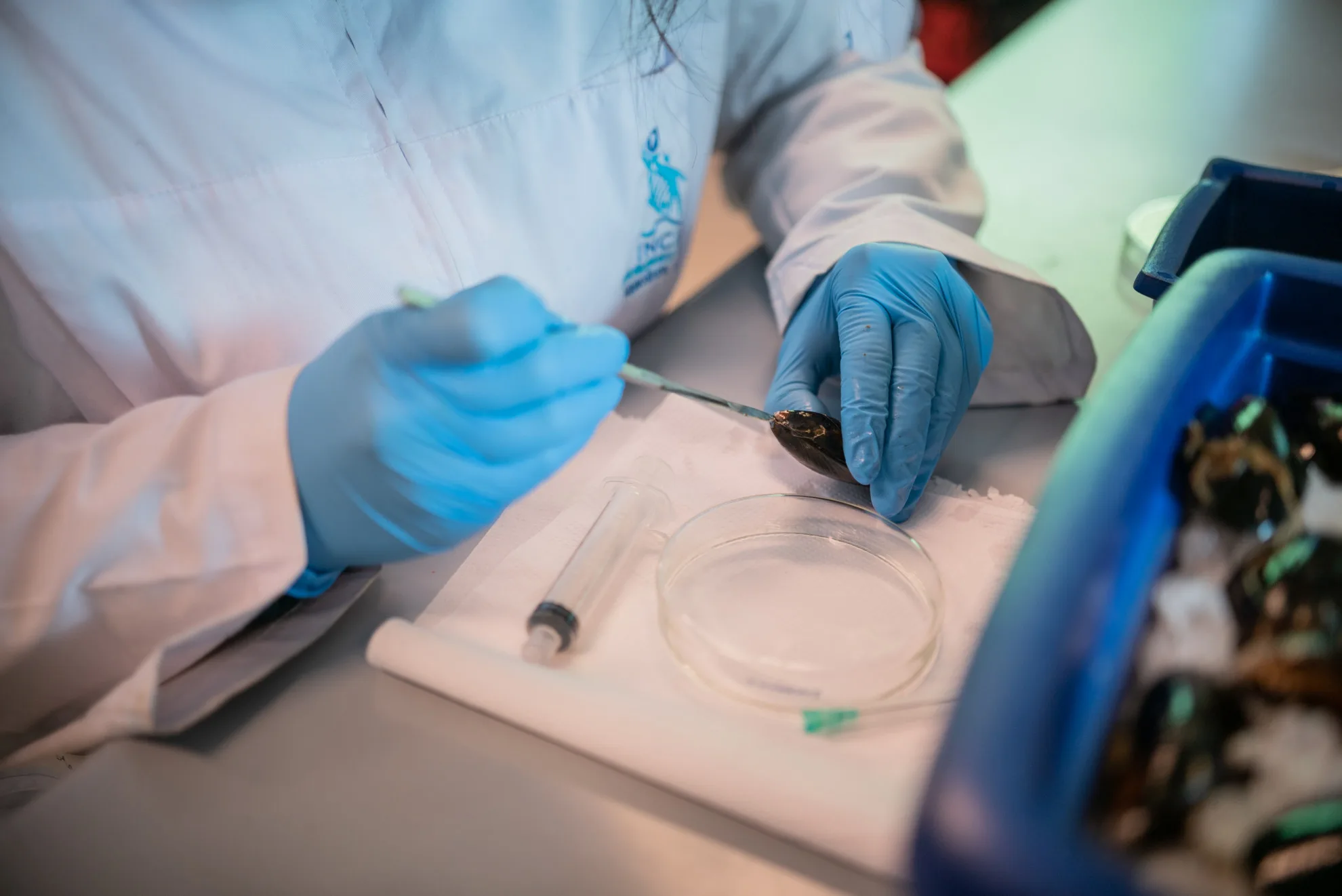
How can scientists better understand the availability of Chilean mussel seed? Which environmental factors influence larval abundance? And what can the genetics of Mytilus chilensis reveal about the long-term sustainability of mussel farming?
These questions will be at the center of the 11th Seminar on Research and Applied Innovation in Mussel Farming (SIIAM 2026), to be held on October 30 at the Castro Cultural Center in Chiloé, Chile.
The event will bring together researchers and industry specialists to discuss scientific advances and innovation aimed at addressing some of the major challenges facing Chile’s mussel farming sector.
One key topic will be wild seed availability. Bernardo O. Broitman, from Universidad Adolfo Ibáñez, will present research on monitoring and predicting wild Mytilus chilensis seed availability in northern Patagonia. Oscar Ramírez, from IFOP, will examine variability in mussel D-larvae density and its relationship with environmental signals in Chiloé’s inland sea and the fjords of southern Chile.
Patricio Díaz, researcher at Centro i~mar, INCAR² and Universidad de Los Lagos, will discuss marine biotoxins and their potential effects on the life cycle of the Chilean mussel, while Marco A. Lardies, from Universidad Adolfo Ibáñez, will explore the relationship between seed collection areas and juvenile mortality.
The program will also address the relationship between aquaculture and local communities. César Salazar, INCAR² researcher and professor at Universidad del Bío-Bío, will discuss public perceptions of mussel farming and strategies for strengthening the industry's social license to operate.
Genetics and Innovation for Sustainable Mussel Farming
The afternoon session will focus on scientific innovation and the future of the sector. Dr. Cristian Gallardo-Escárate, Director of INCAR² and professor at Universidad de Concepción, will examine the genetics of Mytilus chilensis and its implications for the sustainability of mussel farming in Chile.
The program will conclude with a specialized workshop on mussel seed led by Carlos Molinet, professor at Universidad Austral de Chile and Principal Researcher in INCAR²’s Sustainable Interactions between Aquaculture, Fisheries and Ecosystems research line.
Running from 8:30 a.m. to 4:00 p.m., SIIAM 2026 will also feature poster presentations and innovative companies, providing a platform to connect science, technological innovation and the mussel farming industry.
The seminar aims to promote the transfer of scientific knowledge to the productive sector and encourage discussion around research and innovation tools that could help strengthen the sustainability and resilience of Chilean mussel farming.
Registration:
https://forms.cloud.microsoft/r/vGKCugggKW