
EpiAqua 2026 reunirá a líderes globales en la UdeC para impulsar la investigación epigenómica en acuicultura
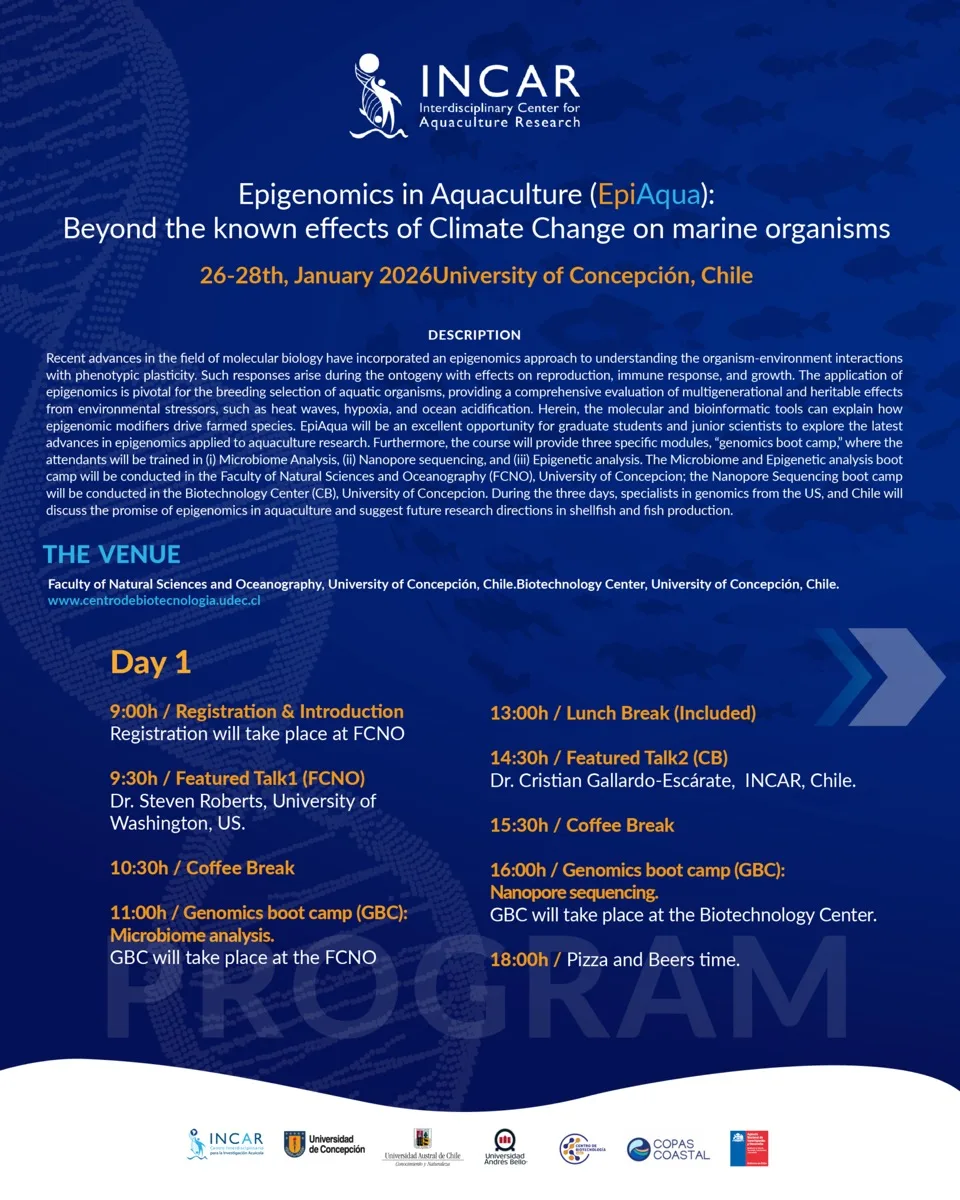
Durante tres días se realizarán charlas magistrales, talleres prácticos y una inédita jornada de mentoring, abordando los últimos avances en epigenómica aplicada al cultivo de moluscos y peces, con miras a un futuro más sostenible y resiliente para la acuicultura.
Entre el 26 y 28 de enero 2026 se realizará la segunda versión del Curso EpiAqua, evento que durante tres días reunirá a expertos estadounidenses y chilenos en la Universidad de Concepción, para discutir el potencial de la epigenómica en la acuicultura, y esbozar futuras líneas de investigación en el cultivo de moluscos y peces.
El curso se prepara para una edición con la participación de destacados expertos internacionales y nacionales. La presente versión contará con presentaciones del Profesor Asociado de la University of Washington, Dr. Steven Roberts; el Profesor Emérito de la University of Wisconsin-Milwaukee, Dr. Frederick Goetz; el Académico del Departamento de Oceanografía de la Universidad de Concepción (UdeC) y Director del Centro de Investigación Aplicada recientemente adjudicado, INCAR², Dr. Cristian Gallardo Escárate, y los Académicos UdeC e Investigadores de INCAR², Dra. Valentina Valenzuela Muñoz y Dr. Diego Valenzuela Miranda.
“En esta oportunidad, el Dr. Steven Roberts abordará cómo los mecanismos epigenéticos permiten la adaptación al medio ambiente, mientras que el profesor emérito Rick Goetz explorará la dimensión evolutiva de la adaptación a través de su modelo de trucha del lago. Desde INCAR, presentaremos investigaciones sobre ostras, choritos y peces vinculados a la acuicultura, ampliando el espectro de especies y enfoques”, adelantó el Dr. Gallardo Escárate.
Además de las cinco charlas magistrales habrá talleres prácticos de análisis de datos, diseñados especialmente para jóvenes científicos y estudiantes de posgrado que buscan adentrarse en el manejo de información epigenómica. En los denominados “Genomic Boot Camp”, los asistentes podrán explorar los últimos avances en epigenómica aplicada a la investigación en acuicultura en tópicos como Análisis del microbioma, Secuenciación Nanopore y Análisis epigenético, todo en el Centro de Biotecnología de la UdeC.
Una de las novedades que trae EpiAqua 2026 es que durante el tercer y último día del curso, se realizará una jornada de Mentoring, en la que un estudiante será asesorado por los investigadores participantes con el objetivo de fortalecer el conocimiento adquirido durante los días previos y relevar la importancia de la colaboración para el desarrollo de un conocimiento científico de relevancia.
“La epigenómica está revolucionando la biología molecular y la acuicultura. Gracias a este enfoque, hoy es posible comprender cómo los organismos responden y se adaptan al ambiente con efectos directos en su reproducción, inmunidad y crecimiento. Desde olas de calor hasta la acidificación oceánica, los estresores ambientales dejan huella heredable en especies acuáticas, y las herramientas moleculares y bioinformáticas permiten descifrar cómo los modificadores epigenómicos influyen en su desarrollo. Este avance abre nuevas oportunidades para la selección de reproducción y el cultivo sostenible de peces y moluscos, marcando un antes y un después en la investigación científica aplicada al mar”, explica el Dr. Cristian Gallardo.
Debido a la restricción para acomodar a los asistentes durante las prácticas, EpiAqua contará con un máximo de 30 asistentes. La inscripción tiene un valor de 150 dólares e incluye la participación en todas las presentaciones orales y actividades del curso.
Reserva tu cupo e inscríbete, antes del 5 de enero de 2026. Para más información, contactarse con Claudia Fuentealba claufuentealba@udec.cl y/o Cristian Gallardo, crisgallardo@udec.cl
Descarga el programa en pdf.